

Education Program
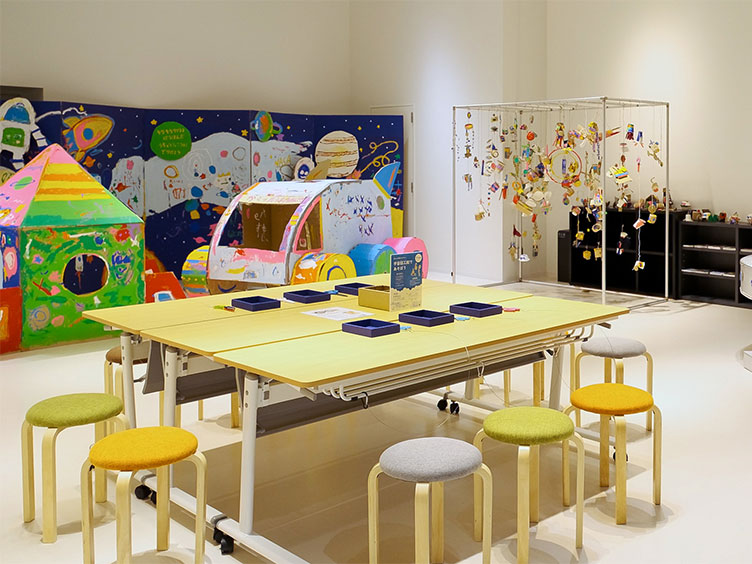
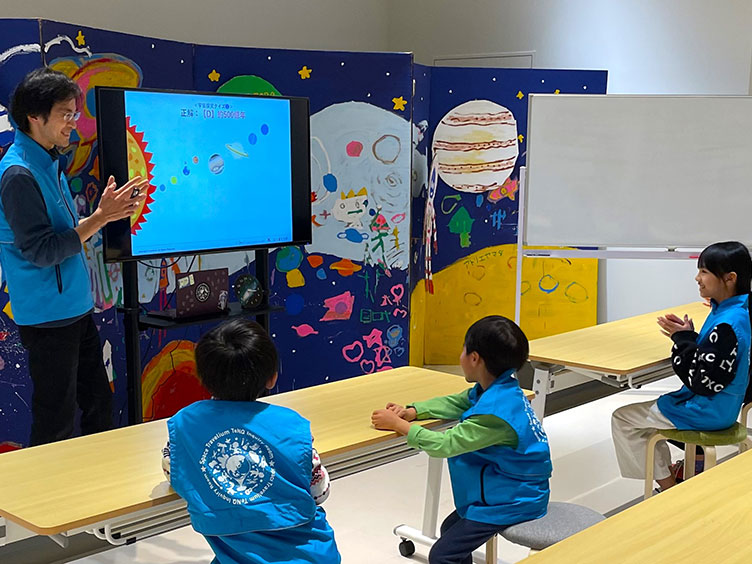
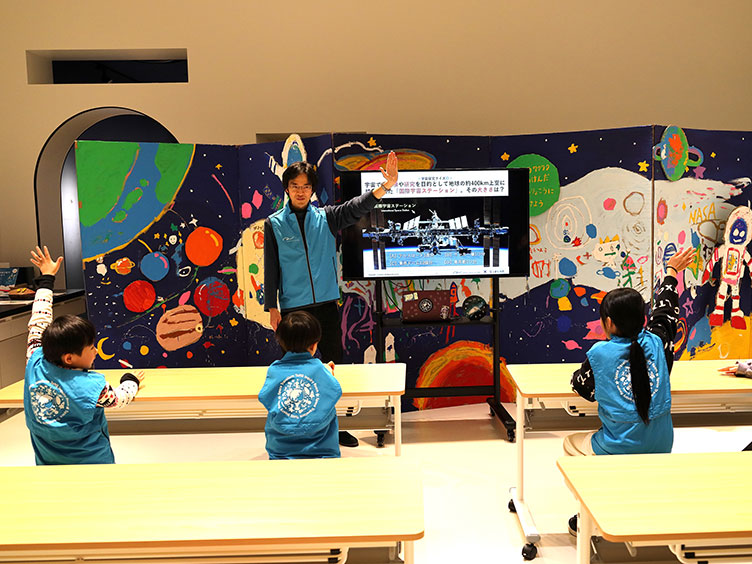
The Exploration Room is based on the concept of "exploring wonder (things that make you curious or interested) and feeling the excitement of connecting with the world," and offers educational programs that broaden children's curiosity and learning by crossing a wide range of fields, including science and art, with a focus on space.
On weekdays, the area is primarily used as a free workshop where anyone can freely enjoy crafting and reading. On weekends, various courses (fees apply) are held on the theme of inquiry-based learning.
About the "Inquiry Room" course
- There are "on-site courses" taken at the facility and "online courses" delivered via Zoom.
- Participants in the lecture series will be issued two admission passes: one for the participant and one for their guardian (accompanying person), allowing them unlimited entry to the facility during the lecture period.
- You cannot join a series of courses in the middle of one.
- Course transfers will only be accepted if the same course is being held in another course within the same month.
- Please reply to the participation information email we sent you at least 3 days before the original course to inform us of your wish to reschedule.
- Tickets for each course can be purchased up until 23:59 two days before the course.
- Consecutive courses can be purchased up until 23:59 two days before the first day.
- Please note that, as a general rule, no refunds will be given even if you cancel after purchasing a ticket.
Terms of service
Please be sure to read these terms and conditions before purchasing.
On-site lectures
These paid courses are held mainly on Saturdays and Sundays in the "Exploration Room" inside the "Space Travelium TeNQ". We have a wide range of courses available, from a series of courses that allow you to learn in depth to individual courses for those who want a light experience.
Those who purchase a consecutive course will be issued an admission pass that allows free admission to "Space Travelium TeNQ" during the course period. (A total of 2 passes for participants and their guardians)
However, please note that if you purchase two or more courses at the same time, we will only issue a total of two tickets for that period.
Introduction to each course
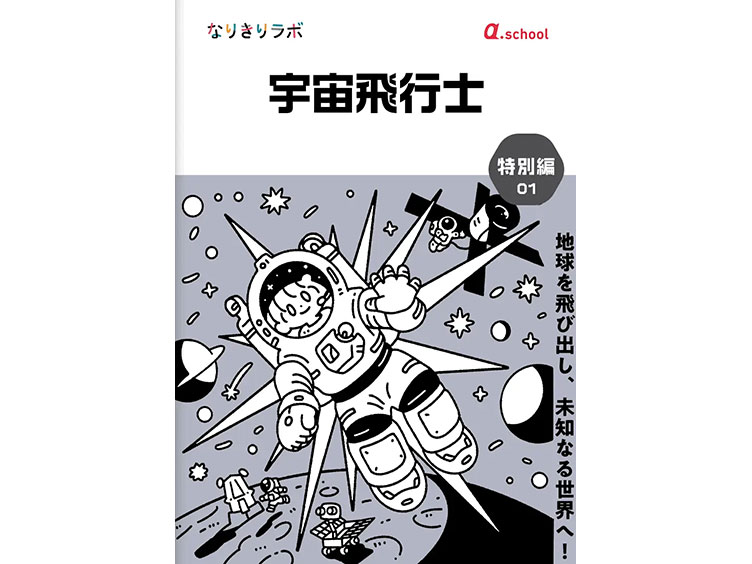
Role-Playing Lab® Special Edition: Astronaut (Trial Version)
| Production | a.school Co., Ltd. |
|---|---|
| Supervisor | Midori Oguma (Science Communicator) |
| Corporations | Digital Blast Inc. |
| Description | This is a 90-minute trial version for those who want a lighter experience of "Nariki Lab® Special Edition: Astronaut." You can experience only a portion of the quizzes and activities. |
| Age Range | 2nd to 4th grade elementary school |
| Admission | 6,000 yen
|
| Capacity | 10 people |
| Date | July 12th Sun. and 18th Sat., 2026 |
| Time |
①11:00~12:30 ②13:30~15:00 ③15:30~17:00 |
| How to buy |
|
| Important Notes | Participants in this course are eligible for a 10% discount on the "Become an Astronaut® Special Edition (8 sessions)" course series. (Valid until March 31, 2027) |
Atelier of the Sky Trial Version
| Production | Atelier Yamada Co., Ltd. |
|---|---|
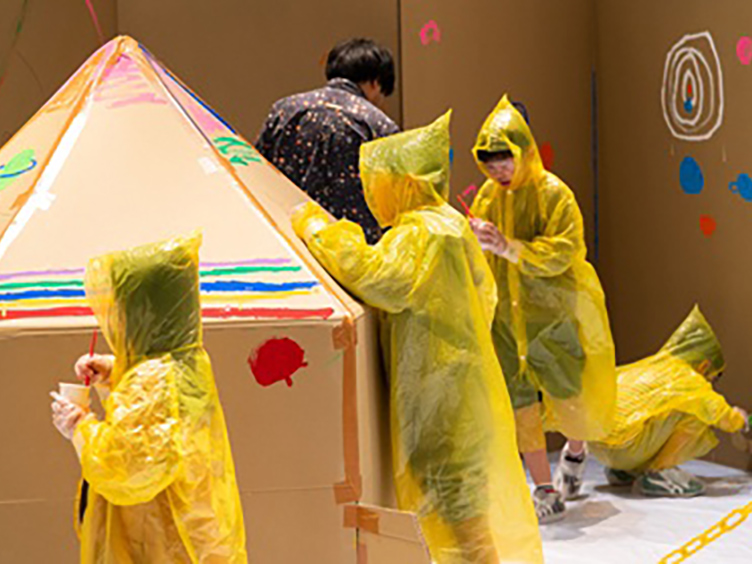
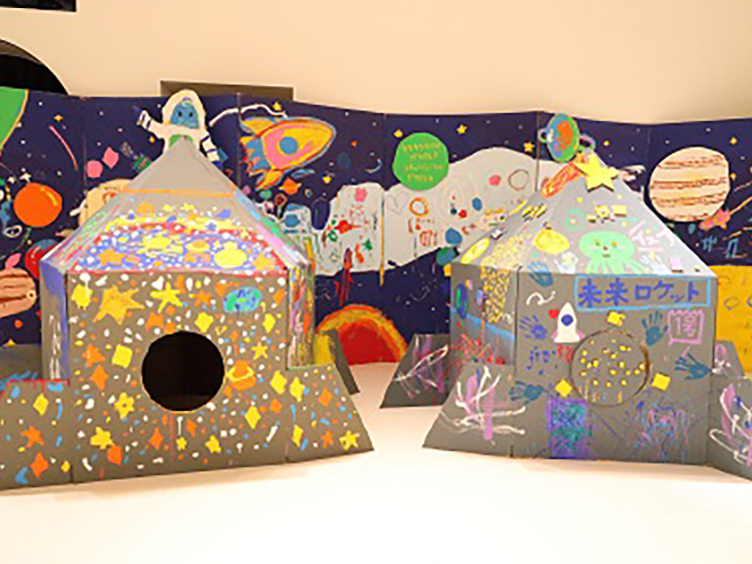
| Description | This is a trial version for those who want to experience "Atelier of the Sky" in a lighthearted way. You can enjoy drawing whatever you like on a rocket made of cardboard. |
| Age Range | Elementary school 1st to 4th grade |
| Admission | 3,000 yen
|
| Capacity | 10 people |
| Date | July 11th Sat. and 19th Sun., 2026 |
| Time |
①11:00~11:45 ②12:00~12:45 ③13:00~13:45 ④14:00~14:45 ⑤15:00~15:45 ⑥16:00~16:45 |
| How to buy |
|
| Precautions |
|
Atelier of the Sky (4 episodes)
| Production | Atelier Yamada Co., Ltd. |
|---|---|
| Description |
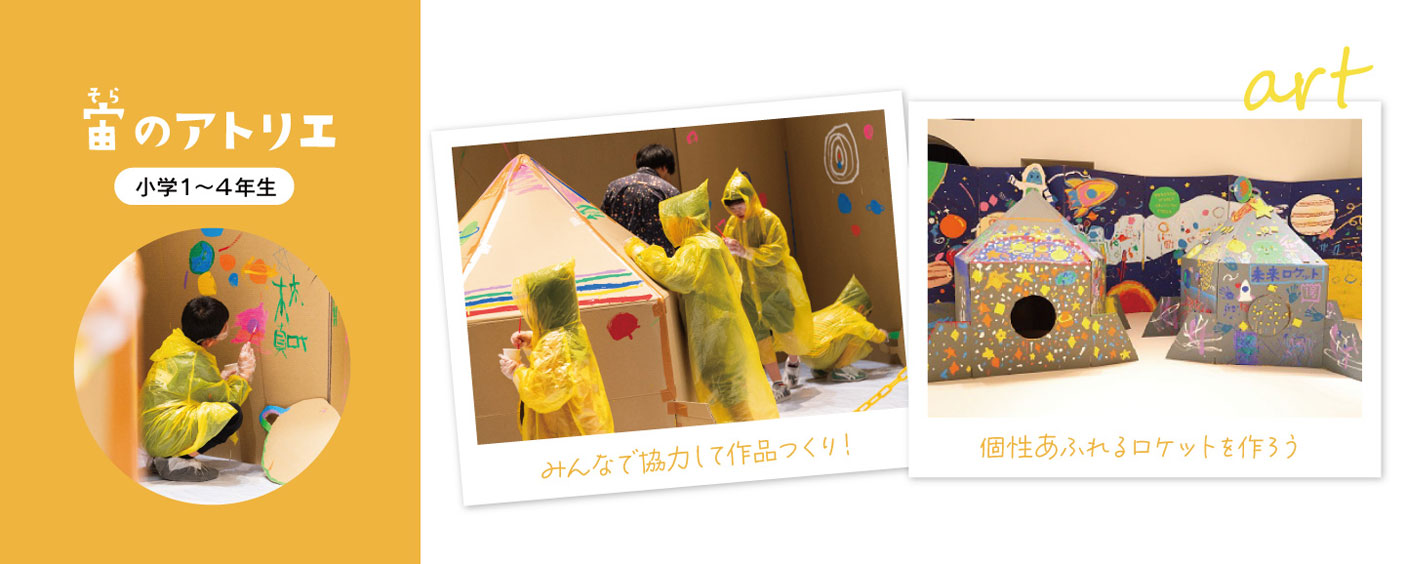
This is an art program where you can use your hands to bring your imagination to life. [1st session] Lecture (about materials and tools) detail:Note |
| Age Range | Elementary school 1st to 4th grade |
| Admission | 13,000 yen
|
| Capacity | Each course has 2 to 10 participants
|
| Date | [2026 Summer Vacation Intensive Course A (13:00-14:30)] July 23rd Thu., 24th Fri., 25th Sat., 26th Sun. [2026 Summer Vacation Intensive Course B (13:00-14:30)] July 30th Thu., 31st Fri., August 1st Sat., 2nd Sun. [2026 Summer Vacation Intensive Course C (13:00-14:30)] August 20th Thu., 21st Fri., 22nd Sat., 23rd Sun. [2026 Summer Vacation Intensive Course D (13:00-14:30)] August 27th Thu., 28th Fri., 29th Sat., 30th Sun. |
| How to buy | |
| Precautions |
|
Become a Labo® Special Edition: Astronaut (8 episodes total)
Become a Labo® Special Edition: Astronaut (8 episodes total)
| Production | a.school Co., Ltd. |
|---|---|
| Supervisor | Midori Oguma (Science Communicator) |
| Corporations | Digital Blast Inc. |
| Description |
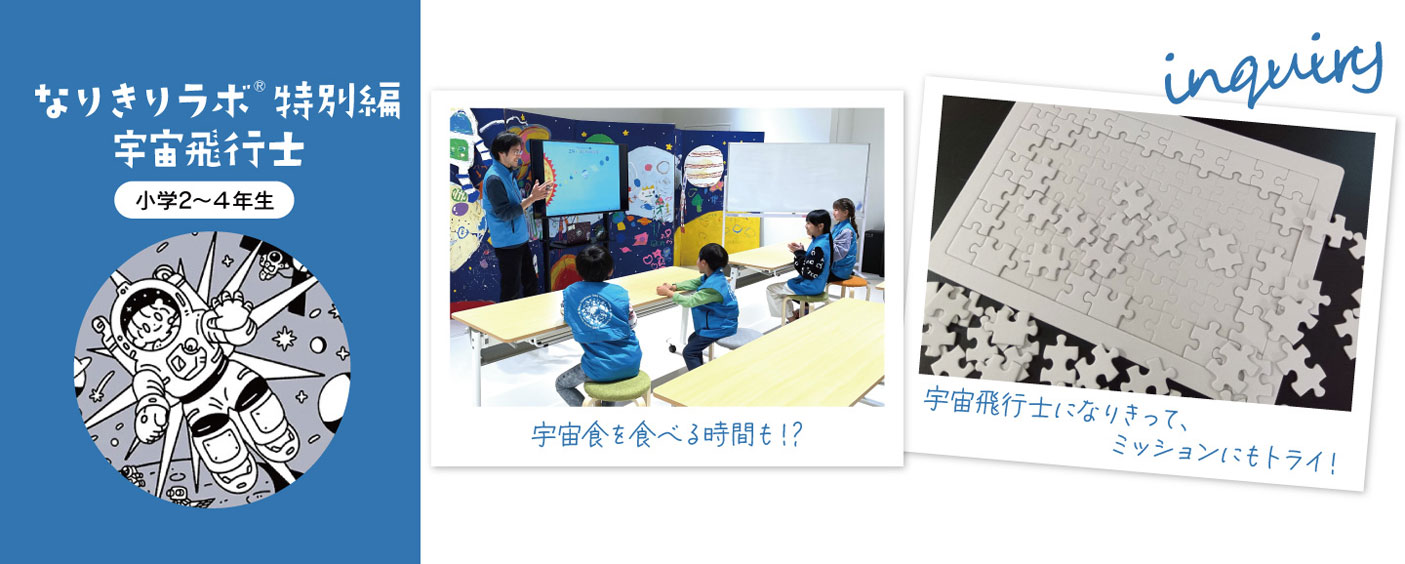
You can learn about space, which has many differences from Earth, by pretending to be an astronaut and thinking about what you would like to do and what you could do if you went to space. You can learn about astronauts and space development in a fun way while doing quizzes, card games, and activities based on the astronaut selection test. Get ahead of the pack and find out what will be necessary in the era when anyone can go to space. [Episode 1: Life in Space]You will learn about space and life on the International Space Station in the form of a quiz. You will also do some work on the facilities on the International Space Station and life in space in the future. [Part 2: History and Present of Space Development]We will learn about the history of space development and modern technology in the form of a quiz. We will also use cards to think about the characteristics of rockets and how space technology can be used. [Part 3: Future space development]Learn about future space development and challenges in a quiz format. Additionally, engage in a workshop to consider issues such as space debris and the subsequent developments of the Artemis program. [Part 4: Jobs related to space development]We will learn about jobs related to artificial satellites and the International Space Station in a quiz format. We will also do a workshop about lunar rovers and invite guests to do job interviews. [Part 5: The job of an astronaut]Learn about astronaut exams and jobs in the form of a quiz. You will also try out some exercises that mimic the astronaut selection exam. [6th Edition: Challenge: Becoming an Astronaut①]As an astronaut, you will perform various tasks in space. Let's challenge your communication skills through these tasks in a game-style mission with your team. [Session 7: The Challenge of Becoming an Astronaut②]Space is a dangerous place, so team up to take on gamified missions that show you how to respond to the unexpected. [Part 8: What it would be like to become an astronaut]While filling out worksheets and touring the exhibits, you will learn about astronauts. Additionally, you will eat space food as if you were an astronaut, and finally, present what you would like to do as an astronaut. |
| Age Range | 2nd to 4th grade elementary school |
| Admission | 36,000 yen
|
| Capacity | Each course has 2 to 10 participants
|
| Date | [Summer Vacation 2026 July Intensive Course (17:30-19:00)] July 23rd Thu., 24th Fri., 25th Sat., 26th Sun., 30th Thu., 31st Fri., August 1st Sat., 2nd Sun. [2026 Summer Vacation August Intensive Course (15:30~17:00)] August 20th Thu., 21st Fri., 22nd Sat., 23rd Sun., 27th Thu., 28th Fri., 29th Sat., 30th Sun. |
| How to buy |
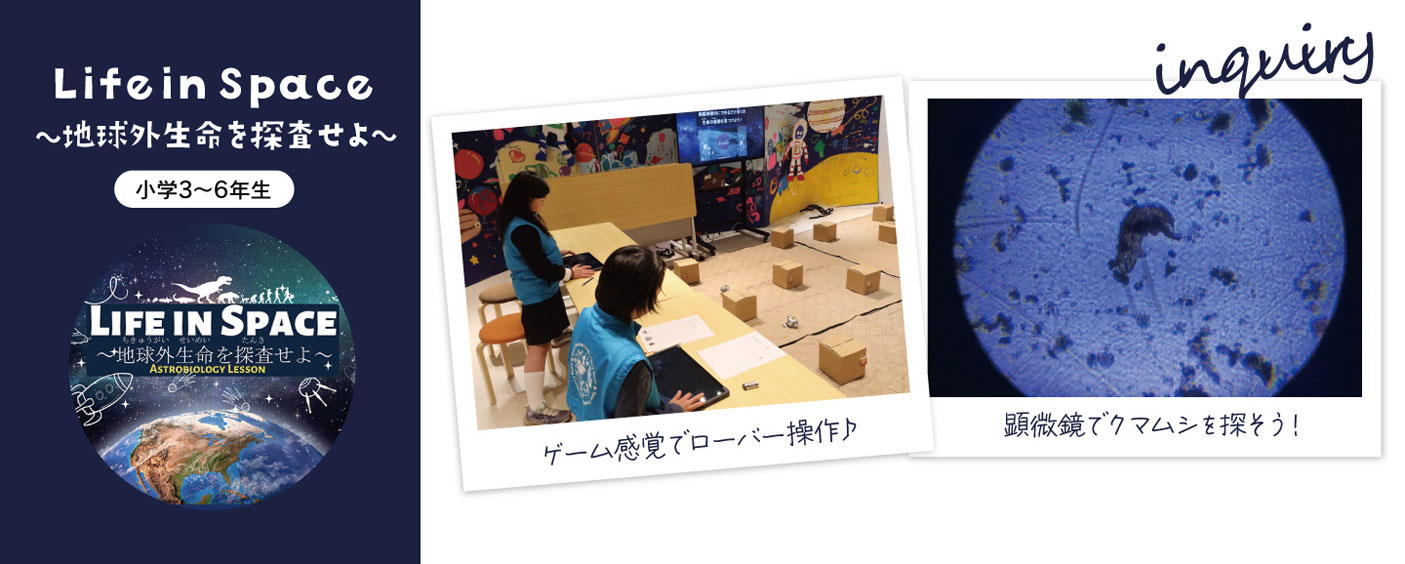
Life in Space ~Exploring Extraterrestrial Life~ (8 Parts)
Life in Space ~Exploring Extraterrestrial Life~ (8 Parts)
| Production | Shogakukan Shueisha Productions Inc. |
|---|---|
| Supervisor | Midori Oguma (Science Communicator) |
| Description |
Is there life in this vast universe? In this course, you will look at the latest research results and think from the same perspective as researchers. After having fun learning about the universe and life through quizzes, card games, microscope observations, and rover operation, you will investigate where life is likely to exist in the universe just like a researcher and create your own research poster. [Part 1: Does extraterrestrial life really exist?]While playing Sugoroku, you will learn about the history of the universe from its creation to the present. You will also learn about modern space exploration and consider the possibility of extraterrestrial life. [Part 2: What is life?]Using the cards, students will learn about the characteristics of life by classifying living and non-living matter, and will also explore some of the leading theories about the origin of life. [Part 3: Where is life?]Through true or false quizzes and worksheets, you will think about where on Earth and what kind of life exists. Then, using a microscope, you will search for tardigrades, which are said to be the strongest living creatures. [Part 4: Let's start searching for extraterrestrial life!]You will learn about the methods being used to search for life on Earth and in space, and then you will actually operate a rover remotely to search for signs of life. [Episode 5: Life is Here]While reflecting on what you have learned so far, you will search for planets that may have extraterrestrial life. Using cards of various planets and moons, you will think about where life is likely to exist. [6th: Space Research Challenge!]Students will use books and the internet to research planets that may have life. As they complete the worksheet, they will research and summarize the planet they have chosen. [7th session: Let's make a survey poster]Students will write down what they have researched about planets that may have life on a poster. They will use colorful paper to create their own original research poster. [Part 8: Trying a presentation!]The research posters that you create will be presented to everyone. We will also invite special guests to the poster presentation to provide feedback on the content of the posters. |
| Age Range | 3rd to 6th grade elementary school |
| Admission | 40,000 yen
|
| Capacity | Each course has 2 to 10 participants
|
| Date | [Summer Vacation 2026 July Intensive Course (15:30-17:00)] July 23rd Thu., 24th Fri., 25th Sat., 26th Sun., 30th Thu., 31st Fri., August 1st Sat., 2nd Sun. [Summer Vacation 2026 August Intensive Course (17:30-19:00)] August 20th Thu., 21st Fri., 22nd Sat., 23rd Sun., 27th Thu., 28th Fri., 29th Sat., 30th Sun. |
| How to buy |
Online Courses
This is a course that can be attended from outside the facility via the internet. Viewing will mainly be done via Zoom.
In addition to the "live broadcast" where you can participate in a Q&A session with the lecturer, there will also be a "rebroadcast" where a recorded video will be distributed for those who were unable to attend.
Space Travelium TeNQ special lecture (total 6 lectures)
| Teacher | Hitoshi Murayama (Professor, Kavli Institute for the Physics and Mathematics of the Universe (Kavli IPMU), University of Tokyo) |
|---|---|
| Description |
[Theme for each session] 
[Part 1: Day and night, seasons, why do the sun and stars move?] What happens on Earth, where we live, is connected to the universe. How does the sun shine? When we think about the mechanics of summer and winter, are there any places that have two summers? Is the reason why the International Space Station doesn't fall the same as the reason why the planets and moons in the solar system revolve? When we think about the Earth from space, we can see that there is a good reason for things that seem obvious. We will talk about various aspects of the universe, focusing on the Earth and the solar system. 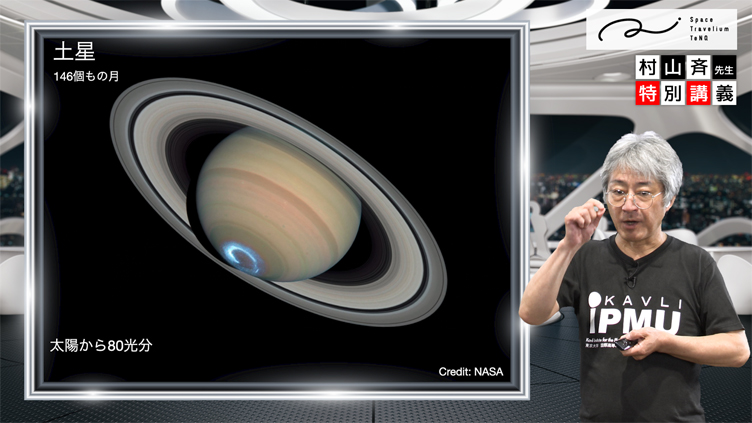
[Part 2: Solar system, planets, moons, exoplanets, aliens?] We have discovered that there are planets and celestial bodies in the solar system with various shapes and characteristics. Jupiter and Saturn, with their beautiful stripes and rings, are masses of gas, so they have no land and sink. We have also found moons with volcanic eruptions and moons with water spewing from underground. Many planets have also been found beyond the solar system. What kind of places are planets outside the solar system? Are there aliens? We will talk about what we have learned from the latest research, from planets in the solar system to stars and planets even further out. 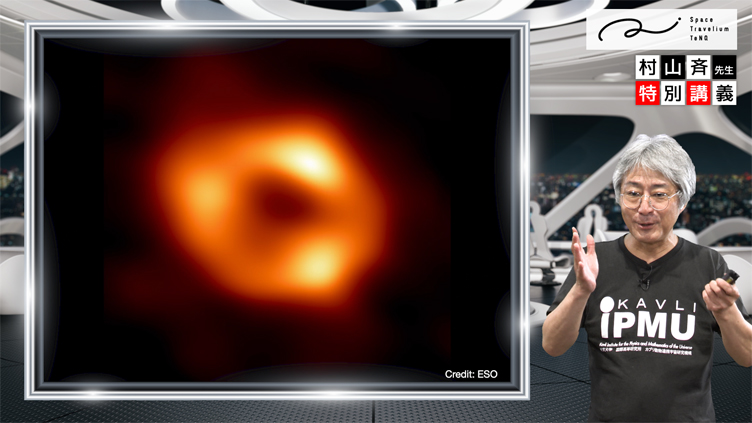
[Part 3: Milky Way, the Life of Stars, and Black Holes] We live in the Milky Way galaxy, which is filled with stars and gas. Using a telescope, we can find nebulae made of colorful gas. Some nebulae were formed after stars died, while others are where stars are being born right now. It has been discovered that at the center of our Milky Way galaxy, there is an incredibly heavy black hole. It is a strange black hole that cannot even emit light, but the latest observations are gradually revealing its shape. We will explain the life of stars and black holes in an easy-to-understand way. 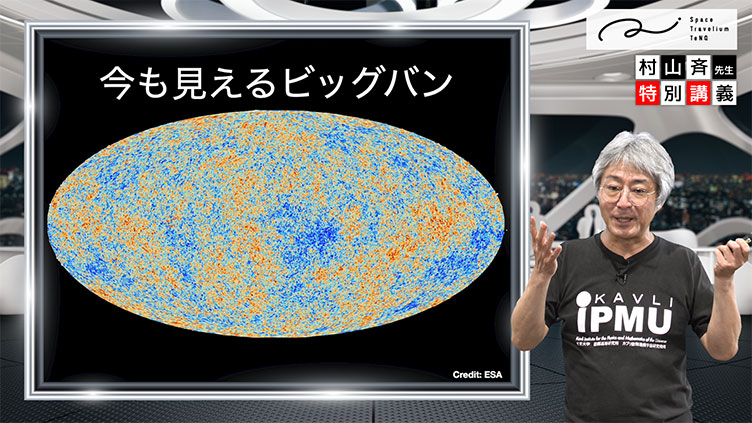
[Part 4: Galaxy, galactic evolution, large-scale structure, the Big Bang] There are hundreds of billions of galaxies, huge groups of stars, in the universe. Galaxies come in a variety of shapes, from spirals to round shapes to wheel-like shapes, and at their centers are supermassive black holes. Can we see black holes? Galaxies merge, gather together to form galaxy clusters, or are scattered throughout the universe to form large-scale structures. How did galaxies form? It all goes back to the Big Bang, 13.8 billion years ago. Let me tell you about galaxies and the Big Bang. 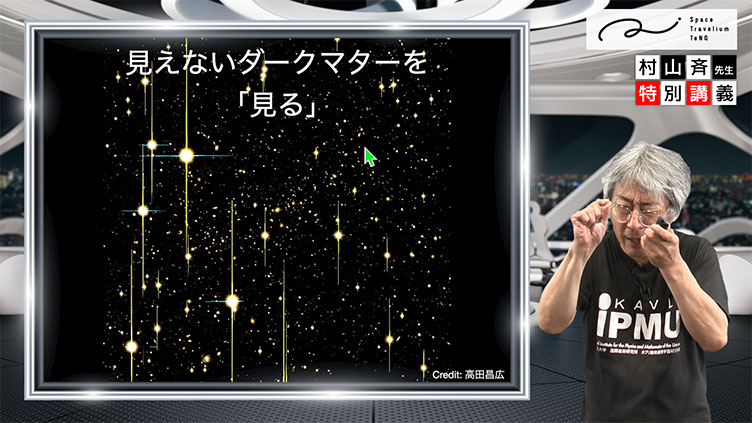
[Part 5: Origin of elements, dark matter] Where did we come from? If we trace our roots, we arrive at stars that were born a long time ago. We have learned that our bodies are made of star fragments, and that gold and silver were born in huge explosions caused by the collision of stars. And it seems that the thing that gave birth to these stars and galaxies is the mysterious dark matter. Is dark matter actually our long-lost mother? What is dark matter, and how should we search for it? We will discuss it together with the latest research findings. 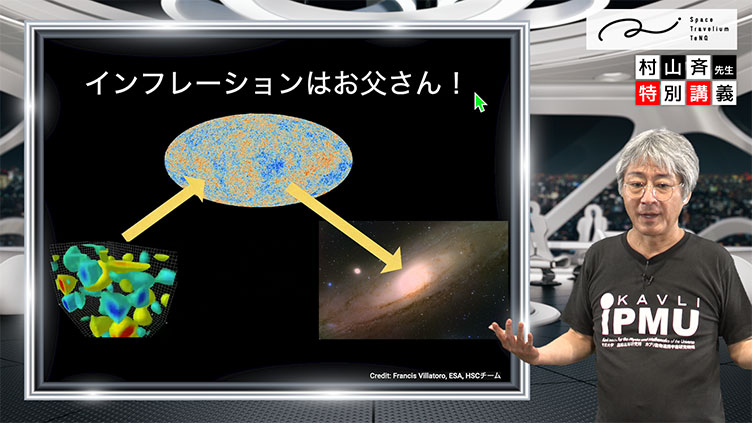
[Session 6: Antimatter, Inflation, and Dark Energy] The more we investigate the beginning of the universe, the more we realize that the fact that we are here in the universe right now is not something to be taken for granted. Perhaps the superhero who saved us from the fate of complete annihilation was a tiny neutrino. Perhaps it was a tiny quantum fluctuation in the microscopic world that gave birth to this universe. And perhaps this universe will eventually expand endlessly and be torn apart infinitely until it ends. And what about the number of universes that we cannot even imagine? We will talk about the beginning and future of the universe, as discussed at the cutting edge of research. |
| Age Range | It can be viewed by a wide range of people, from elementary school students to adults. |
| Admission | Rerun: 1,000 yen/per session Set of 6 sessions: 5,000 yen |
| Distribution period |
Sat., August 1, 2026 -Mon. 31, 2026
|
| How to buy | |
| Precautions |
|
| Lecturer Introduction | Profile of Hitoshi Murayama |