

The Interview
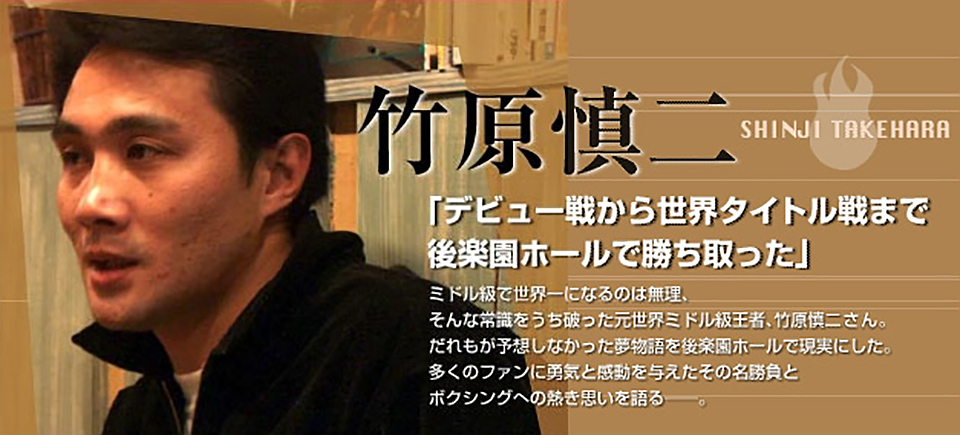
If I were asked what the greatest moment in the history of Japanese boxing was, I would choose "that moment at this place" as one of them. It was December 19, 1995 Korakuen Hall. It was when Takehara Shinji became the WBA World Middleweight Champion. It was said that the middleweight world championship was more difficult for a Japanese person to win than the heavyweight championship. The limit of this class, 160 pounds, or 72.57 kilograms, is the average physique of the United States and Europe, which are advanced boxing countries. The depth of the ranks and the individual abilities of the fighters were said to be significantly different from Japan. However, Takehara, with his powerful blows delivered from his 186 cm height, knocked down Jorge Castro, the Argentine champion who had never been knocked out in his 100 career fights. He then endured the endless fierce striking battle from the middle to the end of the fight and brilliantly won the championship. Seven years have passed since then, and Takehara has left the ring, but he is also active as a boxing evangelist as the demon coach on the popular TV program "Gachinko! Fight Club."
A sense of unity with the audience inspires the competitive spirit
Luck. Yes, I think luck was on my side in becoming a world champion. What I had been practicing was on target, and I think it worked well when we actually fought. Castro's punches were heavy, but his speed was less than I expected, and his technique wasn't that great either. But he was a tough fighter with incredible power.
But only people who know a lot about boxing would say that it was a great thing that I won the middleweight world title. I don't think the general public thinks it's that big of a deal.
But for me, the fight I was most satisfied with out of all my matches was the one against Castro, and I'm confident that I had trained hard to seize that opportunity. And I think the best part of my luck was that the stage for that title match was Korakuen Hall.
For me, Korakuen Hall is where my boxing career began and where I grew up. I took the pro test and made my professional debut at age 17. In the same year, I became East Japan Rookie of the Year, and at age 19 I became Japan champion, and at age 21 I became Asia Pacific champion. I won all of these things at Korakuen Hall. I have many memories and a familiar feeling for the place.
This place is really well-constructed. The spectator seats are very close, and the faces of the spectators are at eye level. Maybe that's why my fighting spirit just keeps rising. The fans who gather here have discerning eyes. If we play well, they cheer us on enthusiastically, and if we play poorly, they'll heckle us nastily. We fighters are drawn in and try our best too. Everyone has been watching us intently since the fourth round. That cheering has been a positive thing for us, and a great encouragement.
Like all boxers, I get extremely nervous before a match. It seems that Hatake (Takanori Hatayama) wasn't like that, but I really didn't want to interact with people or talk to them after I entered the waiting room. I just wanted to be alone and wait patiently until the moment came. And right before the match, I wanted to pray quietly. But once I got in the ring, my emotions were fired up. Korakuen Hall is a strange place.
I want to give it my all until the very end, that's my boxing
![[Photo]](/hall/archives/interview/takehara/img/img_index_001.jpg)
"I fought to the end and won, so it's a more meaningful victory. Even if I get hit, I'll hit back. Because it was Korakuen Hall, I was able to have that feeling."
When I was still active, I just wanted to give it my all. They say that in boxing, you can't let your opponent hit you. I'm sure that's true, but I just wanted to fight as hard as I could and win by knocking my opponent out in the end. If I can't do that, I can't be satisfied with myself. When I win by KO in the first round, I'm happy that I won, but somewhere in my heart I feel frustrated.
Everyone says that the fight against Lee Sung-cheon, when I became the Oriental Pacific champion, was a fierce one. When I fought him again for my sixth title defense, there was a double knockdown, and people say it was even more intense. Lee had a great punch. And because he was smaller, I had a much longer reach. People around me said that it would have been easier to fight him if I had outboxed him, but I think it was good that we fought head-on. I can say this now, but I was injured when I fought Lee, and I was prepared for a tough fight from the beginning. Maybe that's why it became a fight that people still call a good fight. Also, my left eye started to feel strange after that, and I later found out I had retinal detachment, which shortened my career as a boxer.
The same goes for my fight with Castro. What I was most satisfied with was that we were able to fight fully until the 12th round. The champion had a reputation for being an exceptionally tough guy, and was said to be exceptionally strong in fights. The odds were stacked against me. I was completely at a disadvantage. The newspapers and magazines were writing all over the place that I would never win, that it was impossible for the fight to go to a decision, and that if I stuck to outboxing, I would have a ray of hope. I would fight as if I were dead. They told me to outbox, but I thought that it was pointless for a fighter who doesn't usually use footwork to do formal boxing at this point. If they say I'm good at fighting, then I'm good at it, so I'll fight head-on and try to break down my opponent's pace. Then I came up with a strategy to aim for the body, and I thoroughly practiced left hooks and right uppercuts at the gym.
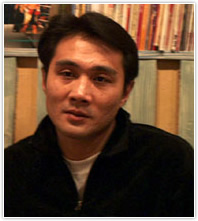
That training paid off, and I knocked him down with a left hook body blow in the third round, but in the end, it wasn't a KO, so I guess it was good. If it had ended there, it might have been called a lucky punch. In fact, I wrote later that "Castro's belly was full of fat." I continued to exchange punches after that, and I fought to the end and won, so isn't that a more meaningful victory? Some of my punches were effective, but even if I was hit a few times, I was fighting with the feeling that I could hit him back. Maybe I was able to feel that way because it was the usual Korakuen Hall.
I lost the world title at Yokohama Arena (June 24, 1996, TKO loss in the 9th round to William Joppy). There were about 14,000 people there, and unlike Korakuen Hall, I was overwhelmed by the atmosphere. Also, my left eye's vision had been deteriorating since the Castro fight, and I was mentally weak. On the other hand, Joppy came at me with the same enthusiasm I felt in the Castro fight, even if it meant dying, and I didn't want to get hurt, so maybe I had already lost. In the end, the referee stopped the match, and I felt relieved at the time.
In the end, this was my last match. After the match, I was diagnosed with retinal detachment. I was still only 24 years old, so of course, there were times when I felt like I wanted to play more, but in my case, I think the retinal detachment gave me the courage to take the plunge.
A stepping stone for boxers - I want people to see his dedication to achieving his dream
![[Photo]](/hall/archives/interview/takehara/img/img_index_003.jpg)
"If you're going to do it, don't compromise. The important thing is to have a dream. Boxing always gives something to the people who come to watch the matches."
Although I never lost and even became a world champion, my life as a boxer was by no means easy. I never fought for money or fame. I had always caused trouble in my hometown of Hiroshima, and was somewhat proud of my skills, but when I moved to Tokyo at the age of 16, I was easily brushed aside during sparring with the older guys at the gym, and that was probably what first got me into boxing. I worked hard, determined to beat them someday. Because I'm a big guy, losing weight was tough. As a result, I got sick easily, and I often had high fevers before matches.
Even if you go through a lot of hardship, you don't get that much money. But after I became the Oriental Pacific champion, I quit my other jobs and focused on boxing. I decided to bet on this until I lost just once. I was able to do that because I felt a sense of relief and accomplishment after winning a match.
My life hasn't changed since I retired. Even though I'm world champion, I haven't defended the title, so I have no money. I'm not well known. All I have left is the title and my pride. The only time fans call out to me is when I go to Korakuen Hall. Even when I want to work, there's nothing. It's only now that I'm finally feeling stable. It's all thanks to appearing on TV.
Some people have said various things about "Gachinko!", but I think it contributes to the boxing world. The people who come to Korakuen Hall have changed, haven't they? In the past, the atmosphere was somewhat gloomy. There were no young women there. It's different now. The power of television is great after all.
Huh? The guys who appear on "Gachinko!" Well, I'm probably stronger than them. But the important thing is to get on the starting line. If you're going to do it, I hope you don't compromise. If you do that, I'm sure you'll get something out of it. Of course there's the joy of winning a match, but there's something in the ring that can't be expressed in words. The important thing is to have a dream.
I think boxing always gives something to the people who come to watch the matches. There are many good matches, even in the fourth round. They are not fighting for money. But they still do what they do. I think that if you go to Korakuen Hall, the people watching will definitely feel something.
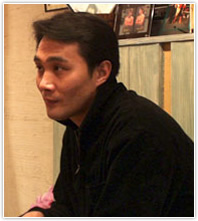
When I was still active, I often received fan letters. They would say things like "I was moved" or "It was encouraging." At the time, I didn't understand what people meant when they said that. I felt a bit puzzled, thinking "I'm only doing this for myself." But now that I've retired, I can finally think, "I see, I had something to convey to them." When people tell me that they "gave me courage," I'm honestly happy.
It's because of boxing that I can say these things. I'm on TV and I can make these kinds of statements. Customers come all the way from far away to eat at the Italian restaurant I run. If I hadn't boxed, I might still be living a half-assed life. In that sense, boxing is my whole life.
As a boy, he was a notorious delinquent. His days were filled with fights. He was even called "Hiroshima's bulky garbage." He once said that if he had continued on like that, he would probably have been sunk in the Seto Inland Sea by now and not survived. With that in mind, the role of the leader in "Gachinko!" seems like a perfect fit for Takehara.
As he himself said, what he gained in the ring was not money. Although he shone at the top of the middleweight division, the highest level of boxing, he did not receive the honor that befitted his achievement. However, he gained something much greater. Have courage, whatever form it takes. Have a dream that will carry that courage. Takehara's life as a boxer is a happy one, as he has engraved such words that he needs to speak on his body and has also had the opportunity to convey them.
(Interview January 9, 2002)
![[Photo]](/hall/archives/interview/takehara/img/img_index_005.jpg)
The day that changed history, December 19, 1995. With his powerful punches from his 186cm height, he challenged the champion Castro without ever flinching, which led to the feat of Japan's first middleweight champion.
![[Photo]](/hall/archives/interview/takehara/img/img_index_006.jpg)
In the third round, Takehara knocked his opponent down with a left hook body blow, and continued to control the pace thereafter, winning by decision with a 2-6 point margin. He became the undisputed world middleweight champion.
Photo courtesy of Boxing Magazine
- Unauthorized reproduction of articles and photographs published on this site is strictly prohibited.
![[Photo]](/hall/archives/interview/takehara/img/img_index_007.jpg)
Shinji Takehara: Profile
Shinji Takehara Born on January 25, 1972 in Hiroshima Prefecture.
He made his professional debut at age 17 in 1989, and won the All-Japan Middleweight Rookie of the Year the following year. In 1991, he won the Japanese middleweight title with a 7th round knockout victory over Saijo Taketo. He defended the title four times. Two years later, he won the deciding match against Lee Sung-cheon by 12th round knockout, and became the Oriental Pacific middleweight champion, defending it six times. In 1995, he won the world middleweight title with a decision victory over Jorge Castro, but lost the following year to William Joppy and lost the title. He was diagnosed with retinal detachment and retired. He had 24 wins (18 knockouts) and 1 loss in 25 fights. After retiring, he ran the Italian restaurant Campione while working as a TV personality. He was especially popular on TBS's Gachinko!